Michel Rolland: A Wine Legend’s Farewell
*Article Compiled by Wine Editor Axel Ritenis with the assistance of Google Gemini AI
Posted on Monday 23 March, 2026
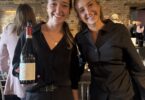
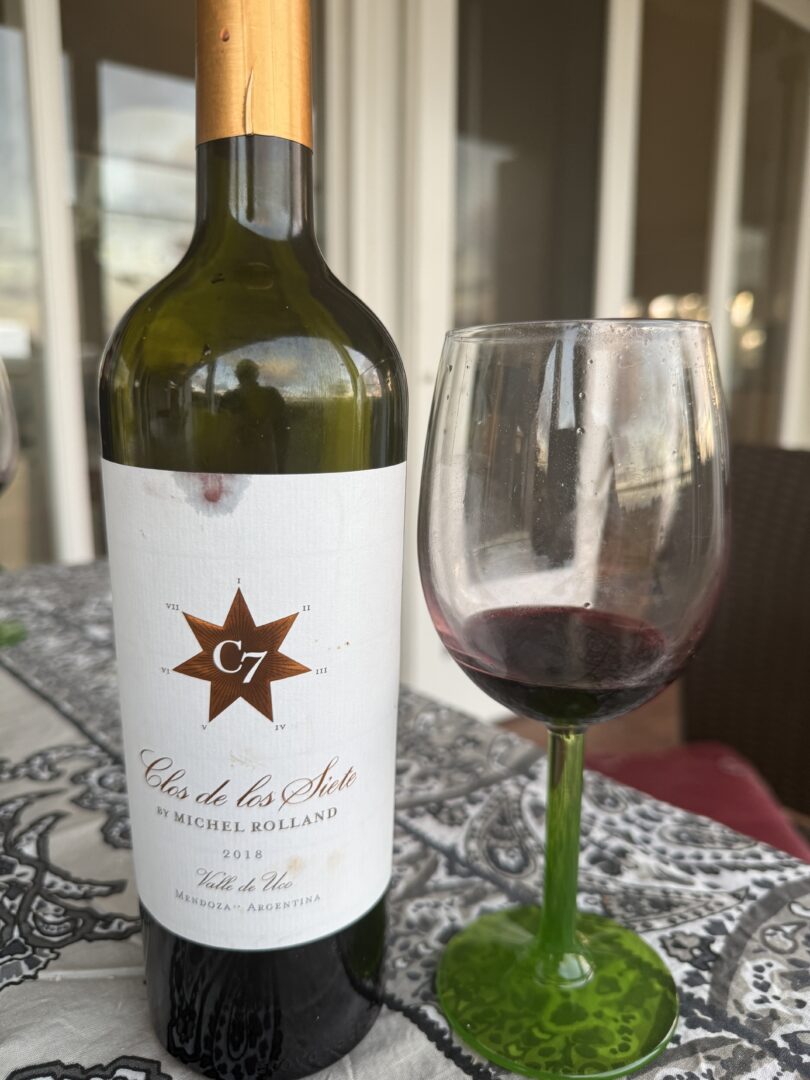
The wine world is mourning the loss of its most influential, charismatic, and at times polarizing figure. Michel Rolland, the man who effectively invented the concept of the “flying winemaker,” passed away on March 20, 2026, in Bordeaux at the age of 78. Ironically on the evening of Friday 20 March ,..I was visiting some of my old friends in Portsea (a luxury beach resort located in Victoria,Australia) and by coincidence we shared an absolutely magnificent bottle of Rollands’s 2018 C7 Clos de los siete ,Valle de Uco MENDOZA Malbec ,..and it was a mature superbly balanced exquisite wine that was easily the most memorable Argentine Malbec I have ever tasted.
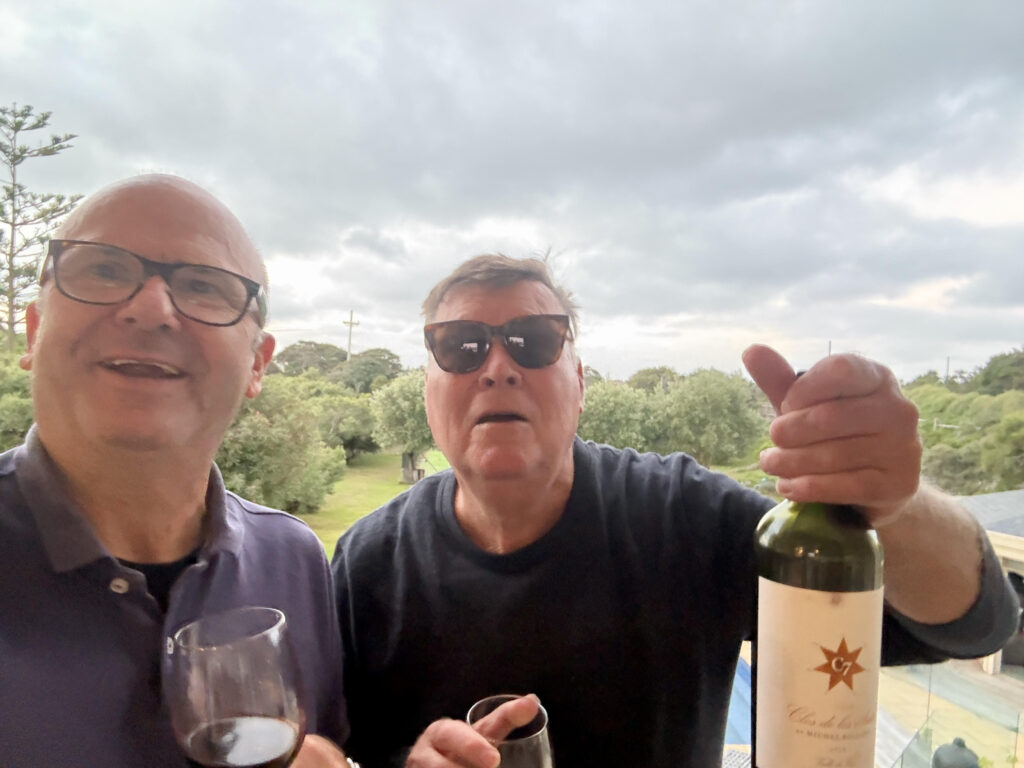
Editor Axel Ritenis with his wine drinking buddy Peter McCoy in Portsea, Victoria sharing one of Michel Roland’s great and memorable wines
It outclassed the various Zapata Malbecs I have tasted,..probably because of its age and maturity but it was less about accentuating the Malbec flavour profile and more about creating a “velvety Bordeaux like fruit bomb” .In other words it was quintessential Rolland in the sense that the Parker inspired criteria of “Fruit intensity and harmonious tannic balance” were at the fore.
Of course I had no inkling that Michel would pass away later that day,…but on hearing of his departure I became aware that I was connected to the great vigneron and winemaker on Linkedin and had even had some communication with him over the years.
I felt sad that I had never met him,..for he was, according to reliable reports larger than life and a giant of the Wine world!
His family confirmed that the legendary enologist died suddenly of a heart attack. Rolland leaves behind a legacy that fundamentally reshaped how wine is grown, made, and marketed across every continent.
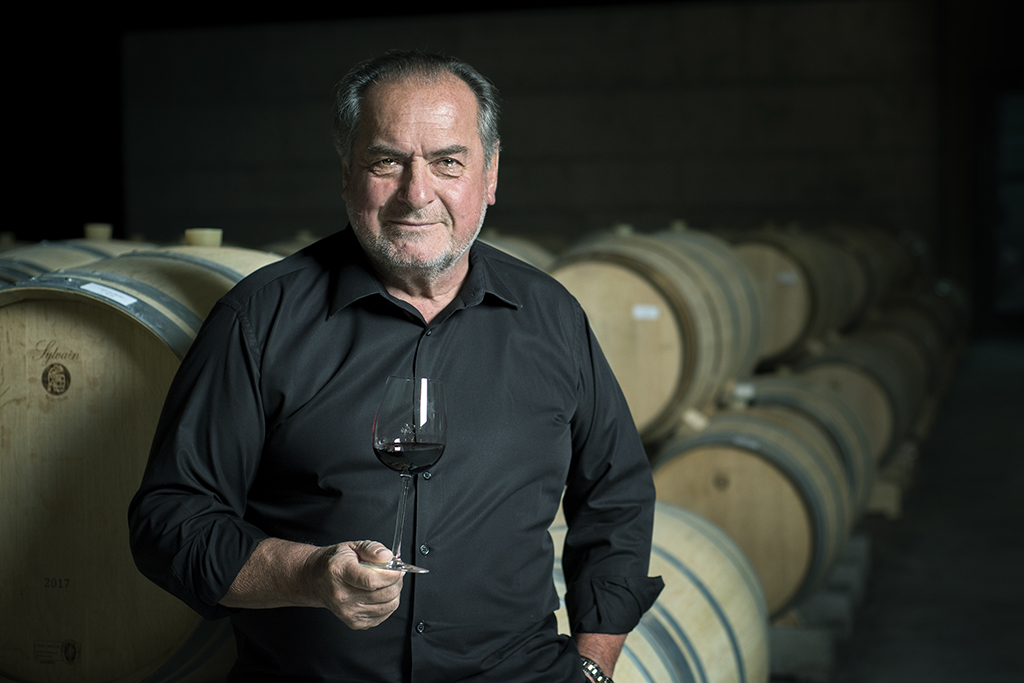
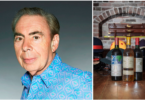
Image Of Michel Rolland from Michel Rolland Archives – Wines Of Argentina Blog
The Architect of Modern Wine
Born on Christmas Eve in 1947 in Libourne, Rolland grew up at his family’s estate, Château Le Bon Pasteur in Pomerol. After graduating from the University of Bordeaux in 1972—alongside his wife and lifelong partner, Dany—he began a career that would transform the industry.
While many winemakers of his era remained tethered to their family estates, Rolland looked outward. He launched a consulting laboratory in Pomerol that eventually grew into a global empire, advising over 150 estates in 14 countries.
A Global Portfolio
His influence stretched from the “Garage wines” of St-Émilion to the cult icons of Napa Valley. Some of his most notable collaborations included:
-
Bordeaux: Châteaux Angélus, Ausone, Pontet-Canet, and Figeac.
-
California: Harlan Estate, Screaming Eagle, and Staglin Family Vineyard.
-
Italy: Ornellaia and Masseto.
-
Argentina: His ambitious Clos de los Siete project in Mendoza, which helped put Argentine Malbec on the world map.
The “Rolland Style” and the Parker Era
Rolland’s name became synonymous with a specific winemaking philosophy: optimal ripeness. He advocated for late harvesting, low yields, and the use of new French oak to create wines that were “plush,” “supple,” and “approachable” in their youth.
This style perfectly aligned with the palate of influential critic Robert Parker. Together, the “Rolland-Parker” era defined the 1990s and 2000s, pushing global wine quality to new heights while simultaneously sparking a fierce debate over the “internationalization” or “homogenization” of wine.
“I didn’t always admire his fruit-forward style,” noted critic James Suckling in his tribute, “but he was unwavering in his belief that late-picked grapes made softer, more appealing wines with plenty of character.”
The “Mondovino” Controversy
Rolland’s fame reached a peak (and a point of notoriety) with the 2004 documentary Mondovino. The film portrayed him as a globetrotting “guru” who encouraged winemakers to prioritize technology and marketability over terroir. Rolland, ever the bon vivant, took the criticism in stride, famously continuing to smile through the controversy with his trademark “Cheshire cat” grin.
A Life of “Happy Moments”
Beyond the boardroom and the laboratory, Rolland was known for his immense energy and hospitality. Even in his late 70s, he maintained a travel schedule that would exhaust men half his age. He had only recently returned from Argentina to oversee the 2026 vintage at his Val de Flores estate.
He often remarked that the true purpose of wine was to provide “happy moments.” By his own calculations, the millions of bottles produced under his guidance provided billions of such moments to drinkers worldwide.
Legacy
Michel Rolland is survived by his wife, Dany, and their daughters, Stéphanie and Marie, both of whom remain deeply involved in the family’s wine businesses. While the industry has shifted toward fresher, higher-acid styles in recent years, the technical precision and focus on grape quality that Rolland championed remain the bedrock of modern viticulture.
The “Flying Winemaker” has landed for the last time, but the world’s cellars will remain filled with his signature for decades to c
To honor the memory of Michel Rolland, one could hardly do better than to seek out a bottle from one of the estates where his “optimal ripeness” philosophy reached its zenith. Throughout the 1990s and 2000s, Rolland was the primary architect behind dozens of 100-point scores from Robert Parker and other major critics.
Below is a curated list of his most legendary “perfect” and highly-rated wines across his global portfolio.
🇫🇷 The Bordeaux Icons (The Right Bank)
Rolland’s heart was in Pomerol and St-Émilion. He famously turned these “Merlot-dominant” regions into the world’s most sought-after luxury wines.
| Estate | Notable 100-Point Vintages (Parker/JD) | Why it’s “Rolland” |
| Château Pavie | 2003, 2005, 2009, 2010, 2016 | Massively concentrated, silky, and opulent. |
| Château Angélus | 2005, 2020 | Known for pure, lush fruit and incredible precision. |
| Château Clinet | 2009 | A Pomerol masterpiece defined by exotic spice and velvet tannins. |
| Château Pape Clément | 2010 (Red & White) | A Pessac-Léognan icon where he pushed for extreme selection. |
| Château Ausone | 2003, 2005 | One of the most historic estates, elevated by his blending skill. |
🇺🇸 The Napa Valley Cult Classics
In California, Rolland’s influence helped define the “Cult Cabernet” era—wines of immense power, dark fruit, and seamless oak integration.
-
Harlan Estate: Frequently cited as California’s “First Growth.” Rolland consulted here for decades. The 2001, 2002, and 2020 vintages are legendary 100-pointers.
-
Dalla Valle “Maya”: The 1992 vintage was one of the first California wines to receive 100 points, signaling the arrival of the Rolland style in the US.
-
Screaming Eagle: Though often shrouded in secrecy, Rolland’s touch helped maintain the “velvet glove” texture that makes this the most expensive wine in Napa.
-
Bryant Family Vineyard: His work here produced some of the most hedonistic, “fruit-bomb” Cabernets of the 1990s.
🇦🇷 The Southern Hemisphere Frontier
Rolland didn’t just consult in Argentina; he invested his soul there. He saw the potential for Malbec before almost anyone else in Europe.
-
Clos de los Siete: While not always a “100-point” wine, this is his most important legacy—a high-quality, accessible Bordeaux blend made by seven French families in Mendoza.
-
Val de Flores: His personal Malbec project in the Uco Valley. The 2004 and 2005 vintages are considered benchmarks for high-end Argentine wine.
-
Yacochuya: A collaboration with the Etchart family in Salta. These are “extreme altitude” wines—powerful, dark, and intensely concentrated.
A “Value” Tribute
If you are looking for a more accessible way to toast his legacy, look for Château Fontenil (his home estate in Fronsac) or a recent vintage of Château Le Bon Pasteur. Both offer the “Rolland Signature”—lush, dark fruit and integrated oak—at a fraction of the price of the “Cult” names.