

Drinking the Rough with the Smooth
Written by Giles MacDonogh in London
*Apologies to Giles and all concerned for the late Posting of this article- due to Technical and Cyber problems. (Ed.)
Posted 24 February,2026
The year begins in Burgundy, and rightly so: Burgundy is the best and worst of wines. At its best, Burgundy is both ethereal and sumptuous, at its worst, it is mind- bogglingly expensive and soul-destroyingly disappointing. Not even oligarchs are safe from the latter.
You can buy from one of the dozen most respected growers on the Côte d’Or and still feel cheated, as I did a couple of Christmases ago when I opened a mature wine that sells for well over a £1,000 a bottle (it wasn’t nearly
that much when I bought it) and found it tough and unyielding.
Cheap Burgundy is oxymoronic. When you find it, it is probably a mistake, like the time I chanced on a bin filled with 1er Cru Chambertin from Domaine Camus marked to clear at Unwins in Camden Town, and nonchalantly bought the lot. Or a little chicken-and-chips place we discovered once near the station in gloomy Nuits-Saint- Georges that sold domaine wines from ancient vintages at incredibly reasonable prices. The next time I looked for the place, it had closed down.
It is the excellent house of Thorman Hunt that kicks off the season with a tasting of some fifteen-dozen white and red burgundies. Burgundy is the ultimate ‘cru’ wine, where small plots of mostly limestone soil are graded for quality from simple ‘village’ wines, to premier or grand cru. The humble village wine might be a foot away from the premier or grand cru, but (in theory at least) the cru wine will be miles better. Bordeaux is ultimately a
‘brand.’ You buy a product from an estate. The estate decides what material goes into the wine.

Chablis is one of Burgundy’s northernmost outposts, and makes only white, Chardonnay wines. I confess I like austere, old-fashioned Chablis, not the opulent, oaky style that became popular a generation ago. Many
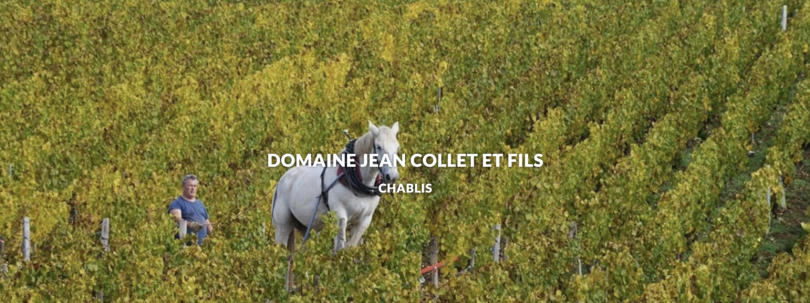
growers have reversed course now, although in vintages such as 2023, the fleshy style is dictated by an exceptionally hot summer. If you are like me, you will opt for vintages such as 2022 and 2024. Of Thorman Hunt’s several producers, I should be happy with Jean Collet’s excellent estate wine, and naturally over the moon with his 2022 1er crus Vaillons or Montée de Tonnerre. Nathalie and Gilles Fevre make tighter wines but I loved their 2023 1er cru Fourchaumes and Mont de Milieu. Christian Moreau also had a lovely estate wine (2024) and a super 2024 1er cru Vaillon (sic).

Down in Burgundy’s deep-south, a star is the Domaine Eric Forest in Vergisson, who makes Chardonnay wines in Mâcon, St Véran and Pouilly-Fuissé. The 2024 Mâcon-Vergisson Sur la Roche is first-rate as is the 2024
minty Mâcon-Pierreclos Clos des Charmes. The best for now is the Saint-Véran Terre Noire. The Pouillys need more time but they will be the best of the lot.

I moved on to the Côte d’Or and Fernand and Robert Pillot who had a trio of great whites from Chassagne-Montrachet (the best being the massive 2024 1er cru Morgeot). Ditto Michel Niellon (and the flinty 2024 1er
cru les Champgains). With Vincent Girardin in Meursault, we seemed to enter another league, especially with his 2024 Puligny-Meursault vieilles vignes, his Meursault Casse-Têtes of the same year, the 1er cru les
Charmes-Dessus and the Puligny-Montrachet 1er cru les Combettes. More lovely Meursault came from Ballot- Millot, particularly the wonderful 2024 1er cru les Genevrières and the same cru in the same year from the
Domaine Latour-Giraud – a little earthier but what lovely length!
No surprises from le comte Armand in Pommard who was showing the 2024 and 2022 1er cru les Epeneaux. Georges Jolliot in Pommard had a super 2024 les Noizons.
In the Côte de Nuits, some plums from the Domaine Felettig in Chambolle, but I like the Beaune 1er cru Les Champs Pimonts over in the Côte de Beaune best. Lastly Marc Roy in Gevrey-Chambertin had a delicious black-
fruits-scented 2024 Clos Prieur and a Cuvée Alexandre from the same year of which he made just four casks!
Red Burgundy is made from Pinot Noir, but if you go to Australia or New Zealand looking for something tasting of red Burgundy you might be disappointed. This year at the big Australia/New Zealand Day tasting I decided I would taste as many Pinot Noirs as I could. I found some nice wines, but very little of it would make you think of Burgundy.
It may be that the climate is often too brutal? Or an absence of limestone hills? Relatively low alcohol levels may represent a recent attempt to counter heftiness?
Possibly Burgundy’s self-assured culinary tradition dictates to winemakers more? There are lashings of cream and cheese in Burgundy’s rich cooking. If you wanted to make Burgundian-style wines you would
choose cooler climates such as Orange, Tasmania; or Geelong, Mornington Peninsula or Yarra in Victoria; or even Western Australia. Otherwise, the more temperate New Zealand would win the day.

The 2023 Gilbert Pinot Noir from Orange is good stuff, with pleasant citrussy fruit, and it has a bit of weight to it. Philip Shaw’s 2023 The Wire Walker is also from Orange, and a nice, rich Pinot Noir too. The 2022
Levantine Hill from the Yarra had a cool nose. Perhaps more Burgundian is Mulline from Geelong, both the straight 2023 and the single vineyard Sutherlands Creek were excellent. We know the juicy wines from Ten
Minutes by Tractor in the Mornington Peninsula. In the same lighter style, Port Philip is also recommended. Out in Margaret River the star is obviously the Mozartian Larry Cherubino with his 2023 ‘Laissez-Faire’. The approach is light and Western Australian, but it’s damned good.
Now New Zealand: The 2019 Jackson Estate Vintage Widow from Marlborough had fruit and body. The 2021 Giesen Marlborough Pinot Noir was wrought in an earthy style, and nicely intense. Its stablemate, Tohu,
actually means ‘earth’. The 2023 is very good. Promising was Waipara West, particularly the 2020 ‘Two Terrace’ and the 2021 Greystone ‘Vineyard Ferment’.

Another top New Zealand Pinot Noir was the powerful 2023 Pegasus Bay from North Canterbury.
From Central Otago the 2020 Dicey Bannockburn Pinot Noir was nutty and complex with a little tomato taste. Akitu was clearly onemof the best, both the 2021 A2 and 2020 A1 are from Central Otago. The latter is a seductive mixture of cherries and coffee. The 2024 ‘Mata-Au’ from Chard Farm had some gamy notes. Also excellent was the 2023 Valli Bannockburn from Central Otago. Central Otago is also responsible for Rockburn’s 2023 ‘Seven Barrels Dick Bunton Vineyard Gibbston’. There is clearly a message emerging here: Central Otago.
And finally, there’s Grenache, or rather Garnacha Negra, to use its proper name. The tasting was organised by the Sommeliers’ Association together with the EU as part of the latter’s campaign to celebrate the origins of Garnacha in Aragon. All eight wines came from cooperative cellars.
The cultivar seems to have originated in Campo de Borja before scaling the dizzy heights of Cataltayud. In the seventeenth century it spread west to Castille and crossedthe Pyrenees to France, where resistance to heat and
wind assured its success in the Rhone Valley. Its weaknesses are well known: it oxidises easily and needs mto be quite alcoholic before it begins to give its best, but when it does, it can be lovely. A little portion of a non-
oxidative grape such as Carignan, Cinsault or Syrah won’t go amiss.

It wasn’t all black Grenache, we had a really nice little Garnacha Blanca 2024 Coto de Hayas, but the two best wines were the cherry-and-liquorice 2021 Anayón from Aragon (with some Cariñena) and the 2020 Llicorella
from Priorat, also with a dash of Cariñena – cherries again but with that smell of demerara sugar I often find in great Grenache.
As there was another EU campaign focussing on North Italian ‘deli meats’, the tasting rounded off with a very welcome plate of crispbreads, salami and mortadella.