“Gus is the culmination of years of rigorous excavation and preparation under some of the most challenging field conditions imaginable, and years of exacting study, documentation, and research. Tyrannosaurus rex is the most iconic pre-historic species in the fossil record, and Gus stands firmly among the greatest examples ever found.”
— Cassandra Hatton, Sotheby’s Vice Chairman and Worldwide Head, Science & Natural History
|
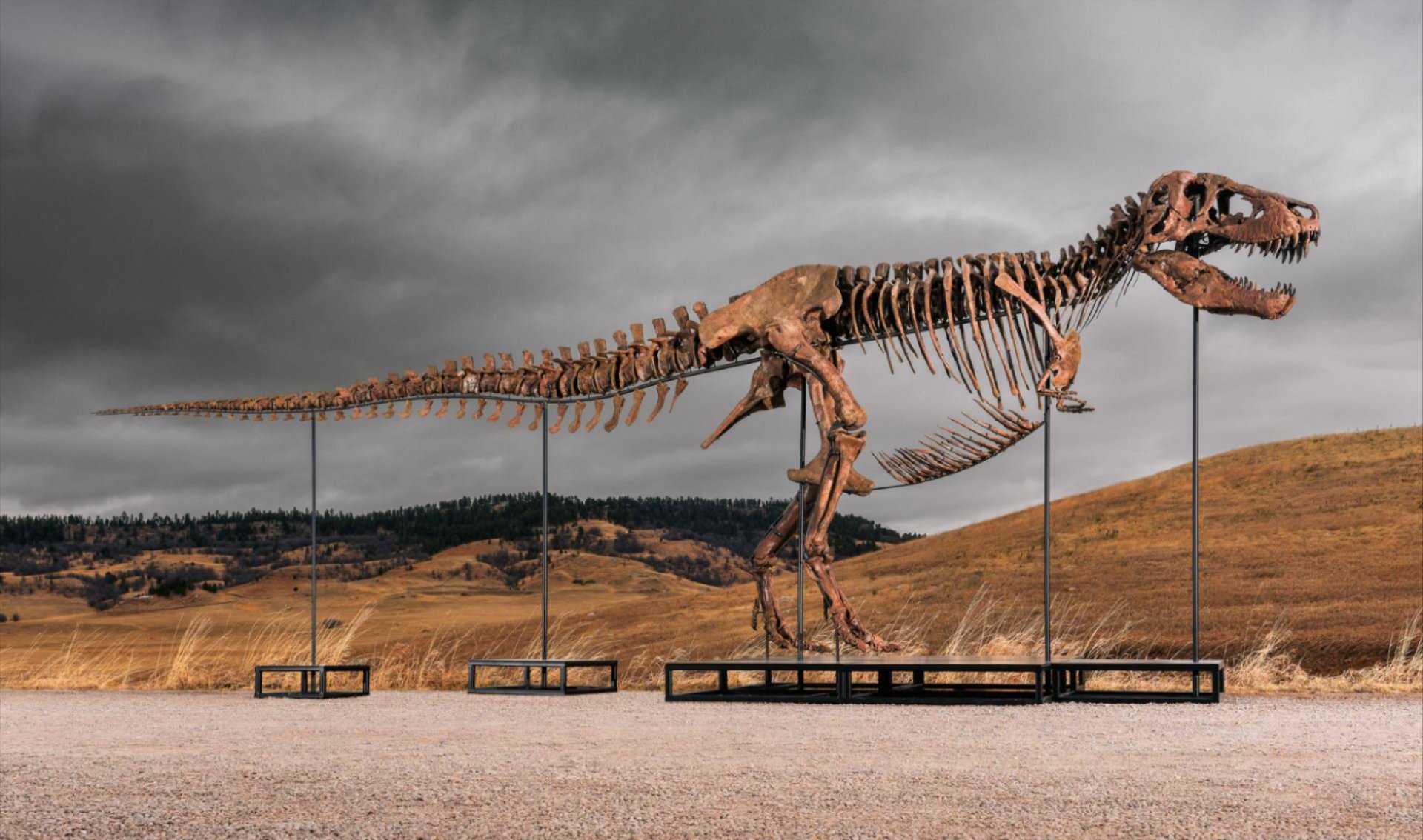
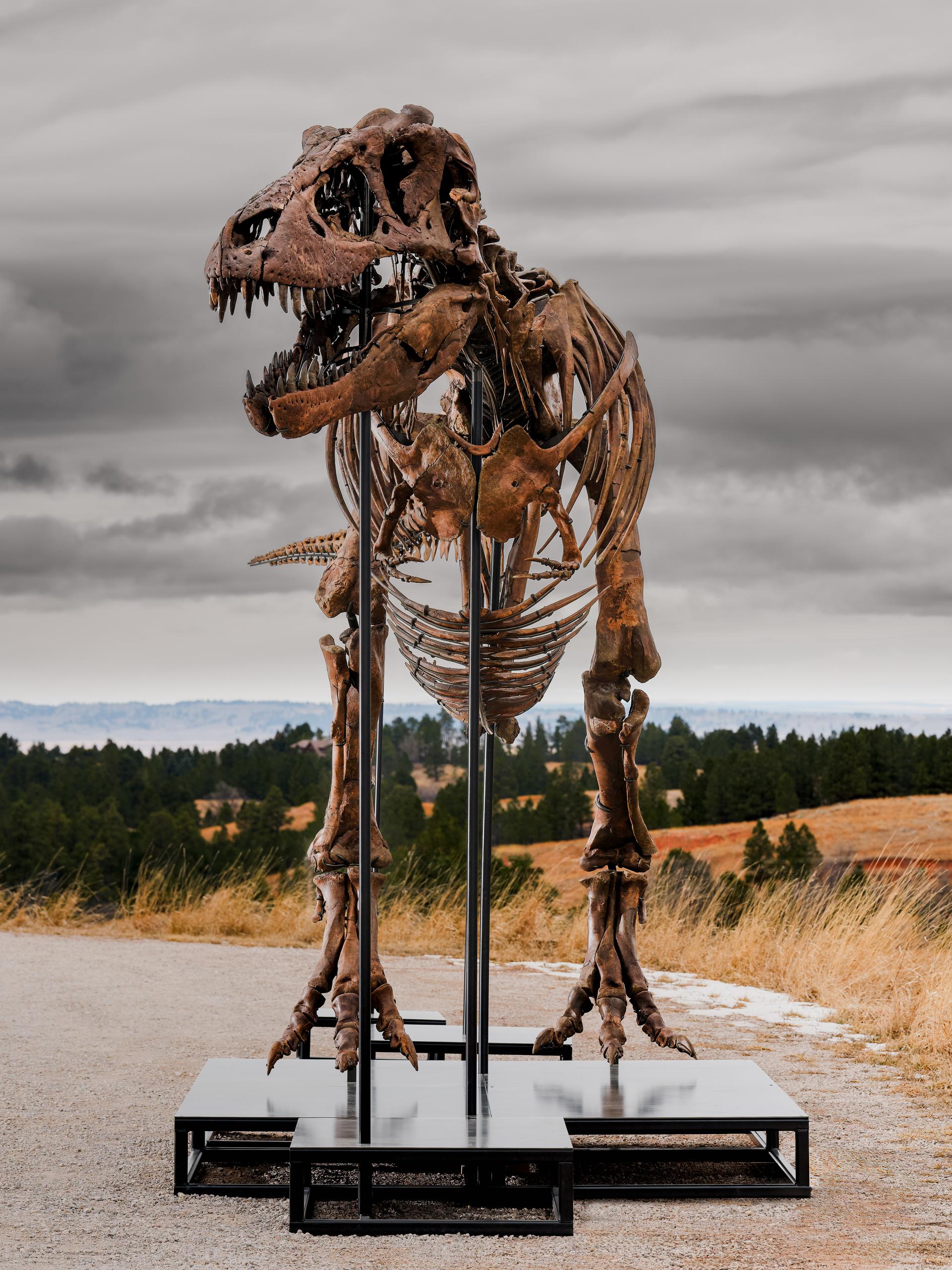
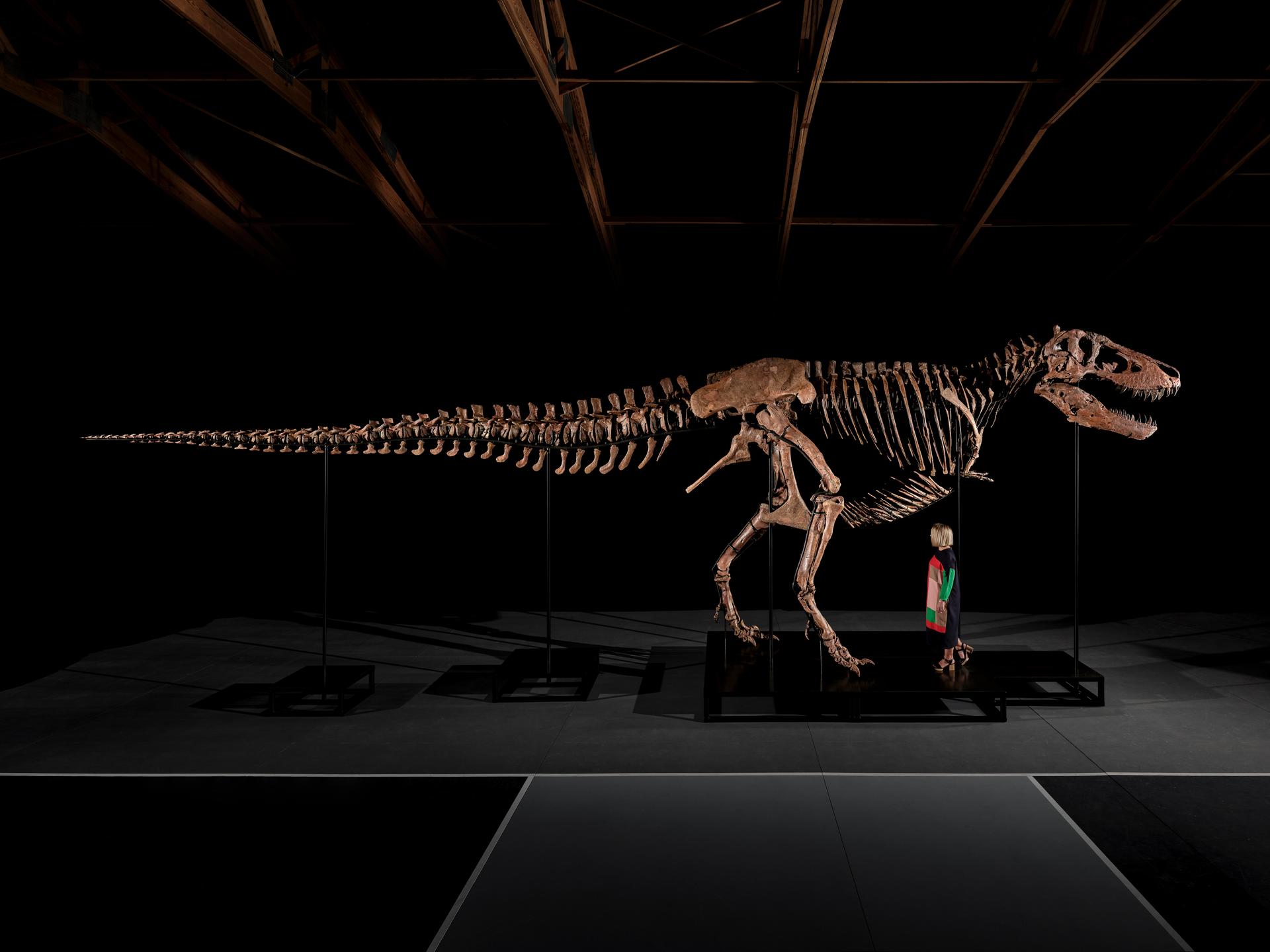
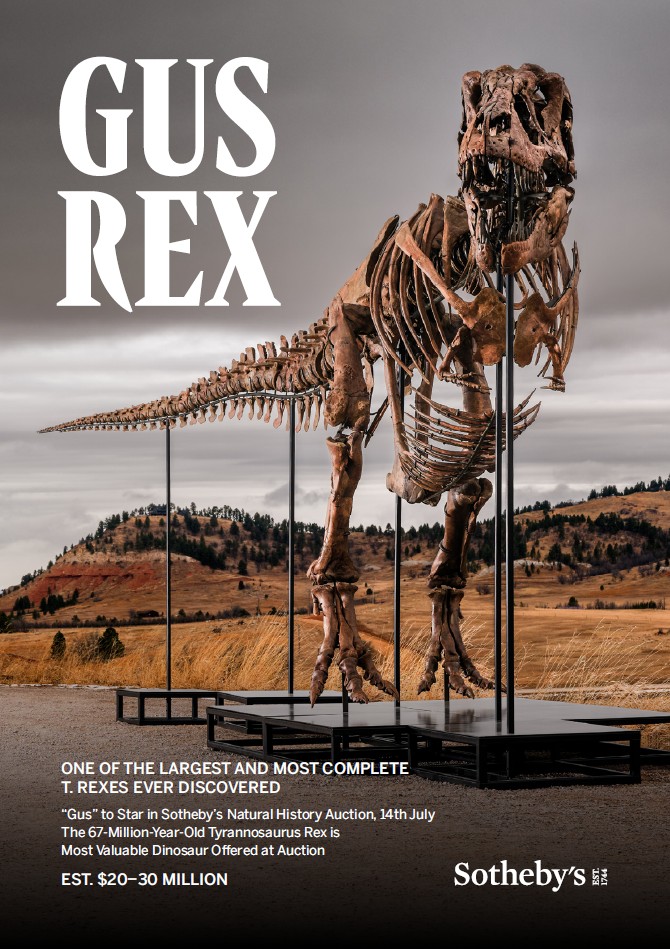
NEW YORK, 27 MAY 2026 – This summer, Sotheby’s will offer “Gus,” one of the largest and most complete Tyrannosaurus rex specimens ever discovered, and the best specimen in private hands. Estimated at $20–30 million, the highest estimate ever placed on a dinosaur, this extraordinary fossil, excavated over field seasons in 2021, 2022, and 2023, will be the star highlight of Sotheby’s live Natural History Auction on 14th July.
T. rex lived during the Late Cretaceous, in the Maastrichtian age, a time marked by warm climates, high sea levels, and rich coastal floodplains that supported an extraordinary diversity of life across what is now western North America. These environments, from river systems to open woodlands, created the ecological conditions in which large herbivores such as Triceratops and Edmontosaurus flourished, and in turn sustained apex predators like T. rex.
Today, T. rex reigns as the world’s most recognized dinosaur – a creature so embedded in popular consciousness, from blockbuster movies to children’s coloring books, that its silhouette is known worldwide. It isdistinguished by an immense skull, deep‑rooted long teeth, and an exceptionally powerful bite, alongside a highly developed sense of smell and forward‑facing vision. Its massive hindlimbs and muscular tail suggest a predator built for bursts of speed and force. “Gus” would have sat right at the top of the ecosystem, using its strength, sharp senses, and adaptability to become one of the most powerful predators the world has ever seen.
“Gus” will be offered on 14th July during the Natural History auction, marking the latest chapter in Sotheby’s industry-leading Natural History sales. The series began in 1997 with the groundbreaking auction of Sue the T. rex, the first dinosaur ever sold at auction, now a centerpiece of the Field Museum in Chicago. It culminated in 2024 with the historic sale of “Apex,” which achieved $45 million and set a world record for any dinosaur or fossil at auction, and in 2025 with the sale of the juvenile Ceratosaurus at $30.5 million, the third highest price ever achieved for a dinosaur at auction. “Apex” is now on long-term loan to the American Museum of Natural History in New York.
Ahead of the sale, “Gus” will be installed at Sotheby’s galleries in New York at the Breuer, alongside other highlights from Sotheby’s Geek Week sales including the History of Science & Technology and Space Exploration. The exhibition, opening on 1st July, is free and open to the public.
|
“This specimen took three years to excavate — with the team sometimes working for weeks straight without finding a thing. The site was a complex fossil bed and preserved many fossils of the flora and fauna that comprised the larger Cretaceous ecosystem. We documented each stage with quarry maps, inventories, and collection data. In the end, our diligence paid off and we were delighted to discover what turned out to be a huge and incredibly complete T. rex specimen. It really does feel like tackling the world’s hardest puzzle, except we have to find all the pieces first. All those bones separated for 67 million years that we can now, almost magically, fit back together. There’s something deeply satisfying about that.”
— Thomas Heitkamp, President, Theropoda Expeditions
(Discoverer and Excavator of “Gus”)
“It has been an amazing opportunity to follow a discovery as significant as “Gus” from start to finish. Seeing the dedication of the team, working hard together to preserve every detail has been both phenomenal and enlightening. Few people know what it takes to bring a specimen of this magnitude to the public. For me the added bonus was knowing that “Gus” was just one of the many pieces of history hidden in the land that Gary and I loved to share. It will be exciting to see how many others will get to enjoy this spectacular discovery.”
— Dana Licking, Wife of the Late Gary Licking
(Owners of the ranch where “Gus” was discovered)
|
Photo Credit: Matthew Sherman
|
The fossil was discovered by Thomas Heitkamp and his team on land owned by the late Gary “Gus” Licking, a cattle rancher in Harding County, South Dakota. Licking had always had a deep interest and connection to the history of his land, and after years of finding teeth and small bone fragments on the ranch, realized the potential of there being something of true scientific importance just below the surface.
Recognizing the need to bring in professionals, Licking struck up a partnership with Heitkamp and his team who began the arduous work of fossil hunting on the ranch. Intuitively connected to his land, Gary pointed out a suggested area for Thomas and team to search on the 6500-acre parcel and turned out to be spot on; “Gus” was found right in the area Gary had pointed out. Sadly, Gary passed away only one year into the excavation, never to see this magnificent discovery brought to light. “Gus” has been named in his honor.
Heitkamp and his team spent 3 grueling summers excavating “Gus,” followed by another 3 years of lab work, carefully extracting the fossil elements from their rocky matrix, before preparing and cleaning them. They then painstakingly catalogued and identified each fossil element, before mounting them to the highest scientific standards.
|
|
|