Amedeo Modigliani
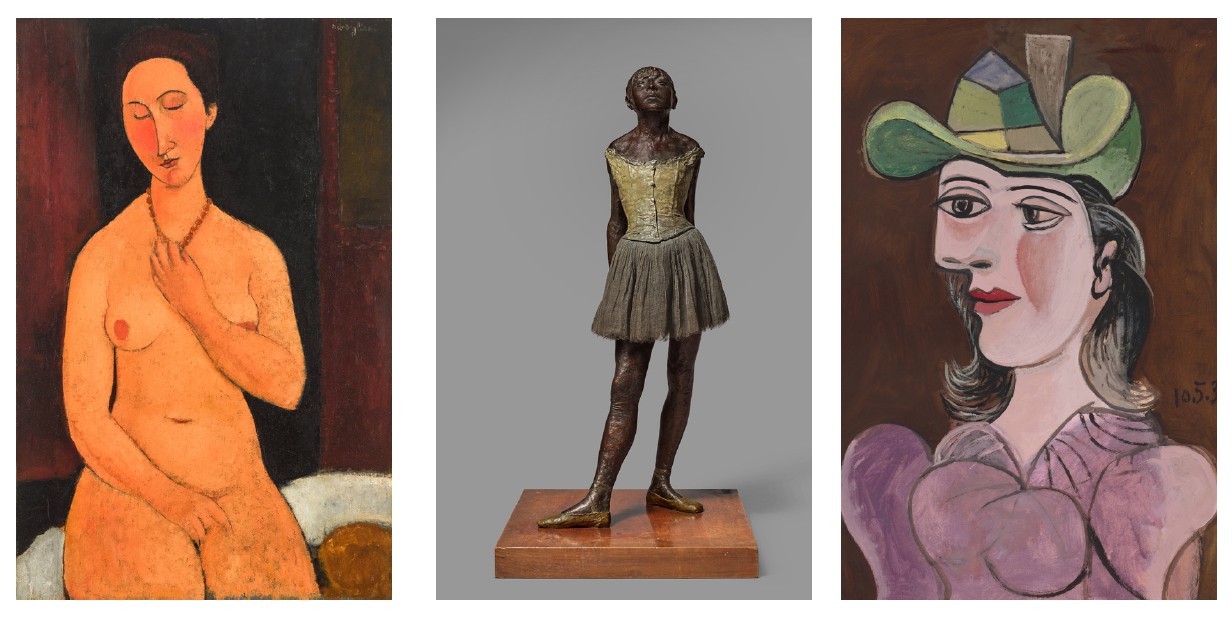
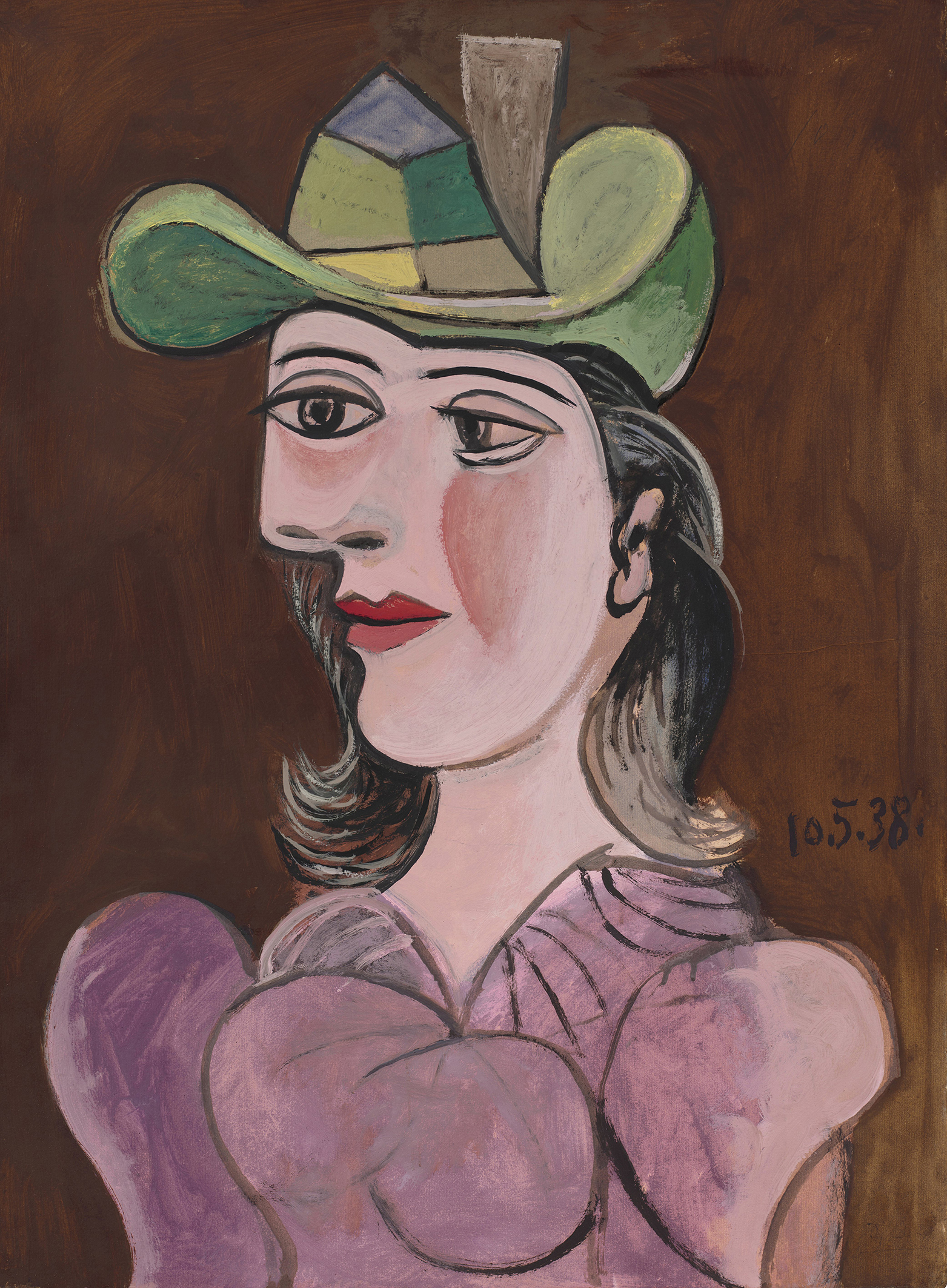
Nu assis au collier
1917-18, oil on canvas
Estimate: In excess of £45 million
“‘Nu assis au collier’ is a cornerstone within Modigliani’s celebrated series of nudes, distinguished by its restraint and psychological depth and – quite frankly – by its audaciousness. As restrained as she seems on the surface, this ‘modern-day Olympia’ nonetheless had the power to upturn tradition, causing a sensation. Her appearance on the market this June will, undoubtedly, be equally sensational.”
THOMAS BOYD-BOWMAN, SOTHEBY’S HEAD OF EVENING SALES,
IMPRESSIONIST & MODERN ART, LONDON
One of the greatest works by Modigliani ever to appear on the market, Nu assis au collier belongs to a pivotal moment in the artist’s career: 1917, the year of his first and only lifetime solo exhibition at Berthe Weill’s gallery on the rue Taitbout in Paris – a short-lived but infamous presentation that scandalised Parisian society and was closed by police on its opening day. The legendary nudes in the show are the works for which the Italian artist is today best known. The two highest-achieving works by the artist at auction – both titled Nu couché – were painted in that same year (selling for $170.4 million and $157.2 million in 2015 and 2018, respectively), underscoring the exceptional importance of this moment within his oeuvre.
Last offered at auction in 1995, and unseen in Europe since 1938, the work emerges from the long tradition of the nude in Western art, tracing a lineage from Titian’s Venus of Urbino to Manet’s Olympia. With this series, Modigliani firmly positioned himself within that canon, reimagining it for a modern audience.
Leopold Zborowski, Modigliani’s dealer, offered the artist a stipend of 15 francs a day in 1917 to paint a series of nudes. With this sum Modigliani created several of the most arresting paintings in the history of art, reimagining the nude for the Modern era, including Nu assis au collier. The artist’s models were paid five francs to pose in an apartment just above Zborowksi’s own at 3 rue Joseph Bara, tucked between the Cimetière du Montparnasse and the Jardin du Luxembourg.
Just as Manet had confounded contemporary audiences of the previous generation with his Olympia, Modigliani’s provocatively modern take on the timeless subject of the reclining female nude would have a profound impact on twentieth century art. Where Manet’s figure confronts the viewer directly, Modigliani’s model turns inward. Seated in a pose that knowingly echoes the Venus pudica of classical antiquity, and wearing a coral necklace reminiscent of those worn in the Italian Renaissance portraits that Modigliani so admired, Nu assis au collier is a timeless fusion of ancient tradition and Modernist innovation.
The work combines the influence of Italian Renaissance and Mannerist painting, of African carvings and the earth-toned palette and geometric modelling of Cubism, to unique effect. With her elongated form and averted gaze, Modigliani’s anonymous sitter feels both classical and deeply personal and intimate – she lifts one hand to her necklace, while the other rests between her legs in a gesture that is at once protective and provocative. Ultimately, her nudity is self-assured and proud, not cloaked in myth or allegory.
Modigliani died in 1920 at just 35, from tubercular meningitis, followed by his pregnant partner Jeanne Hébuterne dying the next day. The tragedy of the artist’s life has become inseparable from the perception of his oeuvre, and the notoriety surrounding the enforced closure of the infamous 1917 exhibition played an important role in establishing the “myth of Modigliani.” The strength of reaction to his now-celebrated nudes was indicative of their central role in establishing him as one of the great voices in the history of twentieth century art.
Nu assis au collier has been exhibited in major exhibitions at The Metropolitan Museum of Art, The Museum of Modern Art, and The Museum of Fine Arts, Boston, among others.