

Some Unusual Wines

Written by Giles MacDonogh
Posted 11 April 2026
Any wine historian will affirm there were plenty of vineyards in England and Wales before the Reformation (whether it was really drinkable or not we cannot say) and that there have been many short-lived experiments since. One of the most notable later attempts to produce wine was at Castell Coch, just north of Cardiff, where the third Marquess of Bute had the architect William Burgess rebuild the mediaeval castle and decided to plant a vineyard in 1875. The vines were Gamay, the mainstay of Beaujolais. By 1884 they were yielding a little less than 1,000 litres, three years later there was a bumper harvest producing nearly 2,500 litres.
In 1897, the still extant London firm of Hatch Mansfield was commissioned to sell the wine plus that from another vineyard in Glamorgan. The wits scoffed, suggesting ‘Coch’ might one day prove an alternative to Hock. The estate’s final vintage occurred in 1914. Every four and a half litres of must required a kilo and a half of cane sugar to bring it up to strength and the war had already resulted in a paucity of the latter. The vines were finally pulled up in 1920. Over the forty-five years the vineyard had been up and running, there had been seven when the grapes were properly ripe. The site is now a golf course.
One of the reasons why wine drinking was popular in the middle-ages was because England was washed with wine from the French south-west, once Henry II acquired Eleanor of Aquitaine in 1152. For three centuries England could ignore sullen autumns back home.
So let us reel forward: the moderate success of English, and indeed Welsh wines these past twenty years may be attributed almost entirely to climate change. The southern parts of this island have got warmer, and grapes are much more likely to ripen. Add to that the presence of good chalky soils on the Downs, for example, and you might have a winning combination. It may indeed be the time to pull up golf clubs and plant vines.
Last month I was at the annual Welsh wine tasting. In 2025 they had a superb year and were rightly proud of the results. As is often the case with English and Welsh wines, the sparklers showed best, such as the White Pét Nat from Ancre Hill, the Sparkling White from St Hilary, and Rhosyn from Velfrey – which also had a good 2024 Solaris. The Dell Vineyard had some unusual blends: Y Lleidr (Pinot Noir, Seyval Blanc and Solaris), Pen y Clawdd (Pinot Noir and Seyval Blanc) and the sparkling Clidda Gawr (Reichensteiner, Schonberger and Phoenix). The coup de coeur, however (and there was one) came from White Castle in Abergavenny: not Gamay but Pinot Noir Précoce or Frühburgunder! There were two 2023s, a single and a reserve red and very good they were too, with proper Burgundy smells and tastes. The reserve had a bit of oak.
I warn you however, none of these wines is cheap: Britain may be hotter but it is still damp.Britain may be hotter but it is still damp.
Basking in sun, simple Bordeaux ought not to be dear, but the legacy of Castor and Pollux (Prime Minister Borage and his Chancellor Sushi) means that we are still paying absurd levels of duty, sending even the modest prices charged by distressed local growers through the roof. I looked at the wines from the excellent firm of Thorman Hunt, many will be sold to restaurants, which mark them up by three or four hundred percent. A really attractive 2022 Côte de Bordeaux from Château Haut Rian was under a tenner, but on a restaurant wine-list it will be nearer £40.
Still, it is possible to purchase them directly. The 2018 Château Noaillac is from the Médoc and naturally dearer. There were good wines from La Tour de By and from a new member of the Barton tribe, Château Mauvesin-Barton in Moulis. Then, there were lesser wines from top estates: 2019 Haut Bages Libéral, a 2020 Pauillac from Domaine Cazes and a 2019 Ormes de Pez that were very good indeed. The same was true of a 2017 Graves from the Château de Cardaillan, a 2021 white from Château Bouscaut and a 2019 Pomerol from the Château de Sales and the 2020 Clos Vieux Taillefer. There were good spicy reds from Château de Laussac in Castillon, and really excellent St Emilions from Château Rol Valentin.
Madeira is an unlikely wine in its way. Much of the island is a barren plateau and the vines struggle for space on the periphery. The musts achieve a sort of immortality by being dosed with alcohol and cooked. I tasted some stunningly-good examples at the Big Fortified Tasting. There was a spectacular list from Blandy’s starting with the nutty, raisiny 10-Year-Old Sercial, then, a fantastic 2007 Colheita Malmsey, a gorgeous 1994 Bual and of course, best of all, a 1965 vintage – peaches, brown sugar, caramel and that acidity!
After this I thought I might find everything else a disappointment, but far from it. H M Borges had some very stylish wines, such as the 1993 Frasqueira (bottled after 20 years in cask) Sercial, a 20-Year-Old Verdelho and a bracing 1998 Frasqueira Tinta Negra.
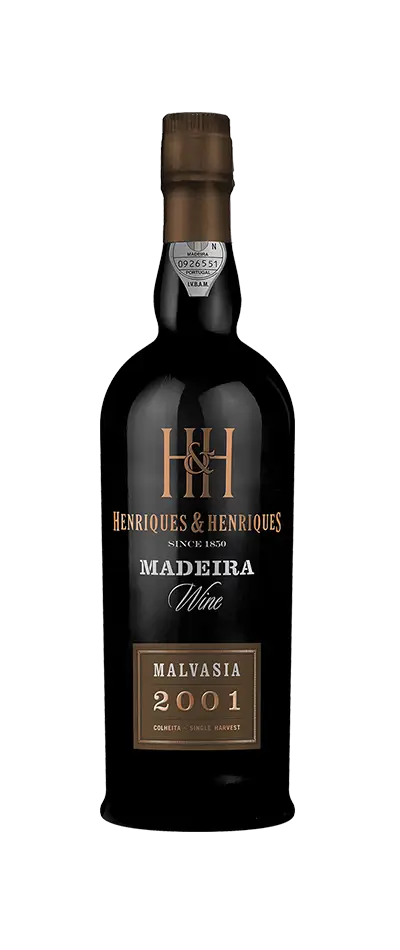
Henriques & Henriques’s Single harvest 2001 Sercial was like some wonderful dry amontillado, the 2000 Bual sweeter and nuttier.
Justino’s 10-Year-Boal was more pure fruit-like – peaches and plums – and with incredible length; the 2007 Sercial Single Cask again like an ancient dry sherry; the 2004 Boal Single Cask peppery; and a 2007 Tinta Negra had a great shuddering length.
Barbeito’s 1993 MEF Frasqueira: cream, nuts, raisins and glorious structure.
Finally, Pereira d’Oliveira’s 2001 Verdelho had me thinking of cakes, biscuits and liquorice; a 1997 Tinta Negra was endless; a 1999 Boal peppery again; and finally, a 1920 Sercial bottled last year. I was provided with a bit of ‘bolo’ to cleanse my palate. It looked like a Dundee cake, and then came the wine and a whole gamut of sensations: cream, walnuts, pepper… I didn’t look for an encore but staggered straight out into the sunlight.